Overbelt Magnetic Separators
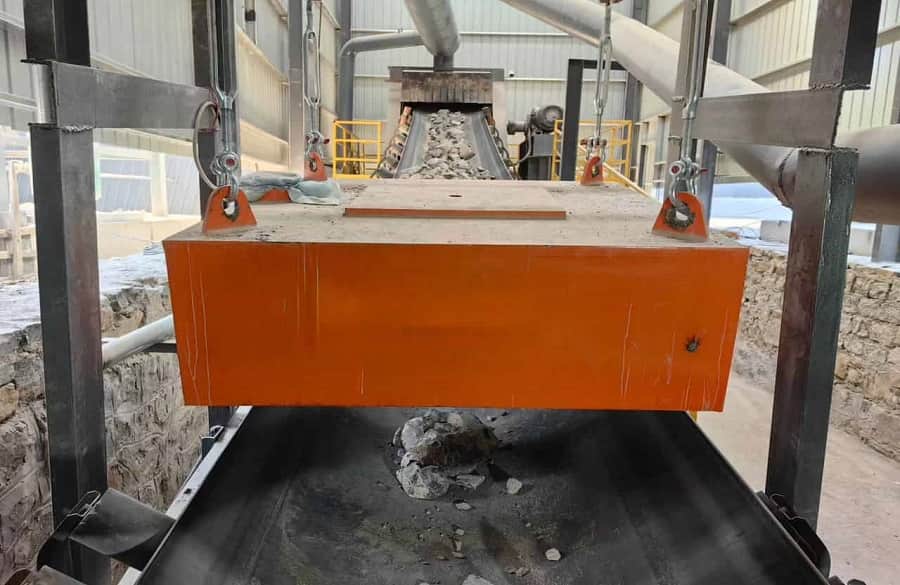
A magnetic separator conveyor uses a magnetic field to separate ferrous materials from a non-magnetic product stream flowing on a conveyor belt. They protect downstream equipment, prevent damage, and improve safety. These systems can be permanent or electromagnetic, and types include overbelt, cross-belt, and magnetic-roller conveyors, each suited for different applications.
How it works
- Magnetic field: A magnetic field is created by either permanent magnets or electromagnets, often in the form of a roller at the head pulley or as a suspended unit over the belt.
- Attraction: As the material moves on the conveyor, the magnetic field attracts and holds ferrous metals, such as iron, nickel, and cobalt, to the belt or magnetic roller.
- Separation: The ferrous materials are carried away from the non-magnetic materials. They are then released from the magnetic field in a separate location, allowing for clean separation of the product stream.
- Self-cleaning: Many systems are self-cleaning, automatically removing collected ferrous materials so they can be discharged separately from the product.
Types of magnetic separators
- Overbelt Separators: These are suspended over the conveyor belt to pull ferrous metals out of the material stream.
- Cross-Belt Separators: A high-strength magnet is suspended in an inverted conveyor, creating a self-cleaning system for continuous separation.
- Magnetic-Roller Conveyors: These have permanent magnets inside a roller that is embedded in the conveyor belt. They can hold ferrous parts in place, which is useful for part holding or during elevation changes.
- Magnetic Plates/Grills: These are installed in chutes or hoppers to capture ferrous materials from a flow of product.
Applications
- Preventing damage to crushers, screens, and other machinery.
- Removing tramp iron from bulk materials.
- Separating and sorting metal waste in recycling facilities.
- Holding parts to the belt for upside-down conveying.

0 Comments